
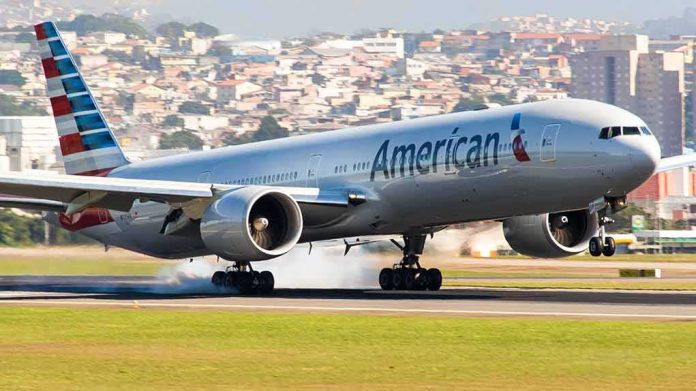
Runway overruns are among aviation’s most stubborn, recurrent accident types; when a fully loaded widebody outruns its stopping distance, consequences move quickly from manageable to catastrophic—as Miami was forced to learn when a 21 Air–operated Amazon Prime Air flight overran, breached the airport perimeter, struck vehicles, and ignited, leaving five dead and five injured.
The Short Version
- FAA and airport officials confirmed a 21 Air Boeing 767 operating for Amazon Prime Air overran a Miami International Airport runway around 2 p.m., after arriving from San Juan.
- The aircraft came to rest beyond the northwest end of the field, striking vehicles and catching fire; five people died and five were injured, according to Miami-Dade officials.
- A full ground stop closed all runways and taxiways as more than 60 fire-rescue units attacked heavy flames and managed multiple patients.
- Investigators will examine landing distance performance, runway condition, aircraft braking systems, crew actions, and operational factors—typical drivers of runway excursion events.
What Happened: A Landing That Didn’t Stop on the Runway
Federal and local authorities established the core sequence quickly. The FAA said 21 Air Flight 7598, a Boeing 767-300 cargo aircraft operating for Amazon Prime Air, overran the runway at Miami International Airport (MIA) around 2 p.m. local time after a flight from San Juan’s Luis Muñoz Marín International Airport. Amazon confirmed its role as the contracting cargo customer and that the jet was operated by 21 Air, a common arrangement in cargo where brand and certificate holder differ. Airport officials placed the disabled aircraft at the northwest end of the field and instituted a ground stop; all runways and taxiways were shut as crews converged on the scene. Miami-Dade leadership later reported five fatalities and five injuries tied to the overrun and post-crash impact/fire.
The operational picture was unmistakably severe. Miami-Dade Fire Rescue described heavy flames and smoke after the aircraft left paved surfaces and struck vehicles beyond the fence line. More than 60 units were deployed, a scale of response consistent with both an aircraft fire and entrapments in ground vehicles. Live coverage captured the knock-on effects: airfield closures, road blocks around the airport’s perimeter, and cascading flight delays while responders fought the fire, mitigated fuel hazards, and triaged patients.
Why Runway Overruns Happen: The Mechanics Behind a Familiar Risk
In safety taxonomy, this was a runway excursion—specifically, an overrun, when an aircraft rolls off the departure end after landing. Industry data place runway excursions among the most frequent commercial-aviation accident categories worldwide; landing overruns are a large tranche within that cohort. An overrun is rarely the product of a single failure mode. Investigators will reconstruct the aircraft’s touchdown point and speed profile, the deployment of spoilers and thrust reversers, antiskid brake performance, runway surface condition (dry, wet, or contaminated), wind and precipitation, and whether the crew executed the appropriate landing configuration and approach stability gates. Each element affects stopping distance margin, and a deficit in two or three—say, a long touchdown on a wet runway with degraded braking—can compound into an excursion even on a runway that would otherwise be more than adequate.
Regulators and airport operators design buffers for this risk. Runway safety areas (RSAs) or engineered materials arresting systems (EMAS) aim to protect people and property beyond the runway end by providing crushable or clear zones to decelerate overrunning aircraft. The NTSB has long referenced standards that call for 1,000-foot safety areas beyond runway ends where practicable; where space or constraints limit RSA length, EMAS is often installed as a mitigation. Whether the specific Miami runway featured EMAS or had an unobstructed safety area will matter to the accident sequence and the severity of consequences beyond the fence line. It will also shape future infrastructure actions, especially given the aircraft’s path into adjacent roads and vehicles.
Operator, Brand, and Responsibility: Who Was Flying and Who Contracts the Lift
The aircraft bore Amazon branding, but the operating certificate belonged to 21 Air. This division is standard in express cargo: an e-commerce or integrator brand contracts lift from one or more 121 air carriers who furnish aircraft, crew, maintenance, and operational control. Amazon confirmed the incident involved its Prime Air network and that 21 Air operated the flight. The FAA’s early statement identified the flight and aircraft type; the NTSB will lead the technical probe. That distinction—brand versus operator—matters for regulatory accountability and for understanding how maintenance, dispatch, training, and performance engineering are organized in day-to-day operations.
For the public, brand visibility often eclipses operational nuance. Yet any causal findings—whether mechanical, procedural, environmental, or human—will be mapped to the operator’s systems: crew training and checking, stabilized approach adherence, brake and reverser maintenance, performance calculation tools, and dispatch oversight. Contracting customers typically cooperate with investigators and can influence safety outcomes through fleet standards and data-sharing, but formal responsibility for flight operations rests with the certificated carrier.
The Investigation: Evidence That Will Close the Gaps
Expect the investigation to pivot quickly to the flight data recorder (FDR) and cockpit voice recorder (CVR), which together will establish approach stability, touchdown parameters, configuration changes, and crew coordination. Investigators will triangulate those data with runway friction and condition reports, weather at landing, tower recordings, aircraft maintenance logs, and post-incident brake and tire examinations. The first 30-day NTSB update typically outlines factual findings, while a final report with probable cause and contributing factors can take a year or more, depending on test results and analytical workload. In parallel, airport authorities will review operational impacts, including ground stop decisions and any infrastructure performance questions that the overrun raised.
The stakes are not abstract. Runway excursions account for a meaningful share of global commercial accidents; the industry has cataloged their precursors for years and published mitigation strategies aimed at approach discipline, landing distance assessments, timely go-arounds when stabilized-approach criteria are not met, and upgrades to runway safety areas where feasible. A sustained safety payoff often arrives when operators integrate flight operations quality assurance (FOQA) data with training—identifying trends like long touchdown points, late configuration, or tailwind landings—and convert them into targeted prevention. That is the cycle Miami’s incident now enters.
Known Facts and the Human Toll
Several elements solidify the factual backbone and underscore the gravity. The FAA and multiple reputable outlets aligned on the core details: a Boeing 767-300F cargo aircraft, operating for Amazon Prime Air, overran the runway at Miami after arriving from San Juan around mid-afternoon local time; the airport enacted a ground stop; and investigations commenced. Miami-Dade officials publicly confirmed five fatalities and five injuries—somber numbers reflecting both the aircraft event and the aircraft’s collision with vehicles outside the fence line. Fire-rescue mounted a large-scale response amid heavy smoke and active fire conditions, consistent with a high-fuel-load transport jet and a multi-vehicle impact zone. These are the stable, uncontested facts on which the technical inquiry rests.
As always in the first days after a major accident, some details evolved—counts of injured, the exact disposition of runways reopening—while the fundamentals did not. The investigative record, not early speculation, will ultimately explain why a 9,000-plus-foot runway and a long-proven widebody freighter did not yield a normal rollout on this approach. That answer will matter beyond a single flight: it will inform training syllabi, maintenance priorities, airport infrastructure planning, and, most importantly, the families who lost loved ones in a preventable chain of events that investigators are determined to break.
5 Killed in Miami Airport Cargo Plane Crash
Footage shows the moment 21 Air Flight 7598, a Boeing 767 cargo aircraft operating for Amazon Prime Air, overran the runway while landing at Miami International Airport on Sunday.
The aircraft struck multiple vehicles and caught fire.… pic.twitter.com/TvxVEluuJm
— Jordan News (@jordannewsdaily) September 7, 2026
What to Watch Next
Three threads will carry durable safety value. First, the FDR/CVR synthesis: touchdown point, speed, configuration, reverser and spoiler deployment, and brake commands versus brake effectiveness. Second, runway environment and infrastructure: friction data, contamination, winds, and whether safety areas or arresting systems performed as designed. Third, organizational factors: operator training on stabilized approaches and go-around decision-making, landing performance calculations under marginal conditions, and any mechanical reliability issues clustered in the fleet. Together, they will move this from a headline-grabbing crash to a set of corrective actions with staying power.
Sources:
businessinsider.com, abcnews.com, theguardian.com, abc7chicago.com, straitstimes.com, nytimes.com, wflanews.iheart.com, ntsb.gov, flightsafety.org, iata.org