
U.S. “self-defense” strikes on Iran’s coastline have jolted a fragile ceasefire and raised hard questions about protecting American sailors without stumbling into another endless Middle East war.
Story Snapshot
- U.S. Central Command says strikes on southern Iran were limited self-defense after American destroyers came under attack.
- Targets reportedly included missile launch sites and Iranian boats accused of trying to lay naval mines near vital shipping lanes.
- Critics argue Washington has not yet released public proof of imminent threats, fueling debate over what truly counts as self-defense.
- The clash unfolds against a wider Iran war and naval blockade, testing Trump’s promise to defend Americans while avoiding full-scale war.
U.S. Destroyers Attacked As Ceasefire Strains In Strait Of Hormuz
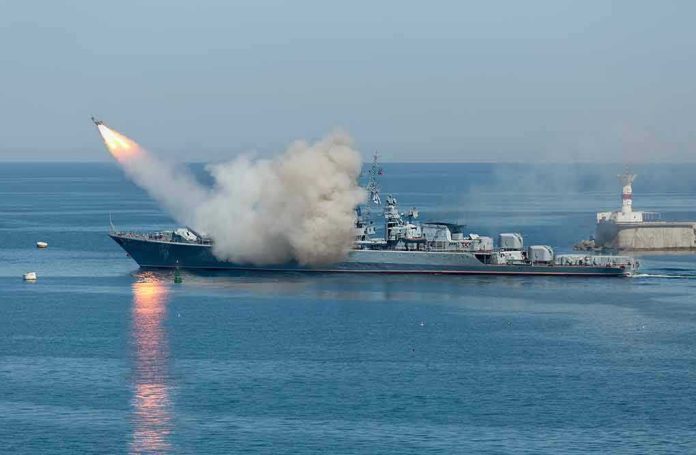
American destroyers operating near the Strait of Hormuz, including the USS Truxtun, USS Mason, and USS Rafael Peralta, were recently targeted by Iranian missiles, drones, and small boats while enforcing a naval blockade and navigating a fragile ceasefire.[1][5] According to reporting, these attacks marked a second wave of Iranian fire on U.S. warships transiting critical global energy routes.[1] The wider conflict traces back to the 2026 Iran war, which began when the United States and Israel struck Iranian military and government targets after failed diplomacy.
U.S. Central Command (CENTCOM) has stated that, despite these hostile actions, American forces have tried to show restraint during ongoing ceasefire talks.[1][2] Officials emphasize that U.S. ships are operating lawfully in international waters and that the mission’s core goals are protecting American personnel, defending commercial shipping, and upholding freedom of navigation.[1][5] For many conservative Americans, attacks on U.S. sailors in international chokepoints are a clear red line that demands a firm but careful response from Washington.
CENTCOM Frames Strikes As Narrow Self-Defense To Protect U.S. Forces
After the latest round of Iranian attacks, U.S. forces launched strikes on targets in southern Iran, including sites around key ports abutting the Strait of Hormuz.[4][5] U.S. Central Command spokesperson Capt. Tim Hawkins told reporters that “U.S. forces conducted self-defense strikes in southern Iran today to protect our troops from threats posed by Iranian forces,” stressing that these were limited actions.[1][4] CENTCOM says the strikes aimed at missile launch sites and Iranian boats that were attempting to emplace naval mines.[1][4]
Officials have also stressed that the mission was conducted during a ceasefire, with what they describe as continued U.S. restraint even as Iran fired on American ships.[1][2] News coverage notes that the strikes were framed as necessary to stop ongoing or imminent attacks rather than to expand the war or hit Iran’s broader economy.[2][5] This language echoes prior U.S. justifications for self-defense strikes against other regional threats that attacked warships and international shipping, such as operations against Yemen-based forces that targeted vessels in nearby waters.
Debate Over Evidence, International Law, And U.S. War Powers
Legal and policy analysts note that self-defense under international law hinges on whether there was an “armed attack,” whether responding force was necessary, and whether it stayed proportionate to the threat. In this case, there is clear reporting that Iranian forces fired missiles and drones at U.S. warships, which supports the claim that American vessels faced real danger.[1][5] However, public material so far does not include declassified imagery or intercepted communications proving the specific Iranian boats were actively laying mines at the moment of the strike.[2]
Scholars who have examined recent U.S. and Israeli strikes on Iranian-linked targets warn that some actions marketed as “self-defense” may look closer to preventive or preemptive war if the threat is not truly imminent.[3][6] Commentators question whether every cross-border strike on Iranian soil fits within the narrow self-defense exception to the United Nations Charter’s general ban on using force between states.[3][6] They argue that, without transparent evidence, Washington risks eroding the credibility of self-defense claims it may need in future crises involving genuine immediate danger to Americans.
Conservative Lens: Deterrence, Restraint, And Avoiding Another Forever War
For many conservative voters, protecting American service members and keeping global shipping lanes open are non-negotiable duties of any commander in chief. Attacks on U.S. destroyers enforcing a naval blockade of Iran, especially after earlier failed talks in Islamabad, reinforce Iran’s reputation as an aggressive actor willing to threaten energy flows and test U.S. resolve.[5] At the same time, memories of past open-ended wars make the right understandably wary of mission creep, vague objectives, and blank-check interventions.
Policy experts point out that strong deterrence does not require occupying foreign territory but does require credible willingness to hit back when Americans are attacked. The challenge for the Trump administration now is balancing limited, clearly justified self-defense strikes with a transparent explanation of the threat and legal basis to Congress and the public. Many conservatives will look for firm protection of U.S. sailors, strict limits on objectives, and a rapid push toward a durable peace that does not reward Iran’s aggression or undermine American strength.
Sources:
[1] Web – U.S. strikes 2 Iranian ports as American warships come under fire
[2] YouTube – US Conducts Strikes Near Iran as Ceasefire Talks Face Fresh Tension
[3] YouTube – US ‘blew up’ 6 Iranian boats, Iran hits navy ships amid fragile …
[4] YouTube – U.S. strikes Iran in ‘self-defense,’ officials say
[5] Web – 2026 United States naval blockade of Iran – Wikipedia
[6] YouTube – US Opens Fire, Disables & Seizes an Iranian Ship Attempting to …