

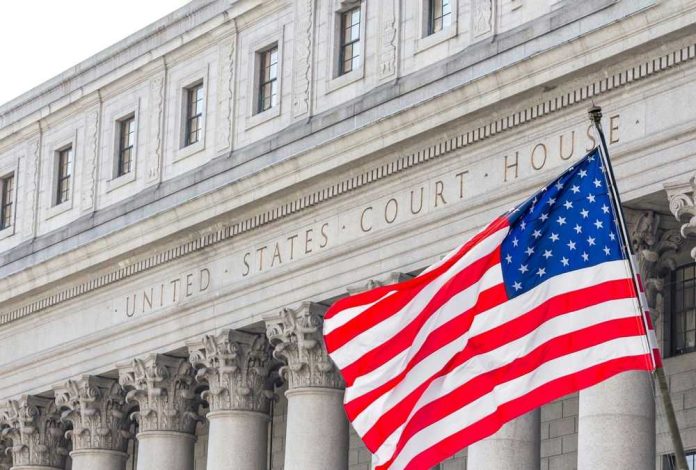
Justice Neil Gorsuch is pressing the Supreme Court to fix two doctrines that, he argues, let the government cut corners on core rights: coerced plea deals and easy digital searches.
Story Highlights
- Gorsuch’s record shows repeated concern for due process and privacy in criminal cases.
- The Court permits plea waivers if they are “knowing and voluntary,” but new 2026 ruling adds a safeguard for injustice.
- Gorsuch has challenged warrantless searches by government-linked actors and limits on home privacy.
- Critics say his civil-liberties stance is inconsistent, pointing to other cases like Dobbs.
What Gorsuch Says Went Wrong
Justice Neil Gorsuch has warned that two legal tracks are eroding basic freedoms. First, he points to plea bargaining rules that allow prosecutors to demand wide waivers of rights. Second, he questions Fourth Amendment rules that let the government use data it gets from third parties. His long paper trail on privacy and process shows these are not new concerns but steady themes in his work on lower courts and the Supreme Court.
The Department of Justice has long taught that defendants can waive many rights in plea deals if they act knowingly and voluntarily. That includes promises not to appeal sentences. The manual cites Supreme Court cases that back this view. Supporters say this keeps the system moving. Critics say it pressures people to give up rights to avoid risk, which can hide errors from review.
How Recent Rulings Shift the Ground
The Supreme Court drew a new line in 2026. In Hunter v. United States, the Court said a promise not to appeal cannot stand if it would lock in a clear injustice. That narrow rule adds a failsafe to the plea system while leaving most waivers intact. It answers one part of the fairness worry, but it does not address day-to-day pressure that drives most plea deals in crowded courts.
On privacy, Gorsuch has pushed back when government or government-adjacent actors search digital content without a judge’s warrant. In United States v. Ackerman, he said a national clearinghouse became a government agent when it opened and analyzed a user’s email beyond a service provider’s report. That move triggered Fourth Amendment limits. His dissent in United States v. Carloss also argued that “no trespassing” signs should matter when police enter private property.
Why This Resonates Beyond Partisan Lines
Americans across the spectrum see a justice system that favors speed and power. People on the right fear unchecked agencies and a surveillance state. People on the left fear coercion that hits the poor hardest. Gorsuch’s focus on warrants, home boundaries, and real consent in pleas speaks to both groups. These fights are not about helping the guilty. They are about keeping the government inside the rules our Constitution demands.
Neil Gorsuch urges the Supreme Court to correct two wrong turns that undermined civil liberties: its endorsement of coercive plea bargaining and its embrace of dubious Fourth Amendment doctrines. https://t.co/ADHANGmtzZ
— Jacob Sullum (@jacobsullum) July 1, 2026
At the same time, Gorsuch draws sharp criticism. Advocacy groups and scholars argue his record is mixed on individual rights. They point to cases like Dobbs, which ended federal protection for abortion, and to earlier positions on anonymous speech and third-party information that cut the other way. These critics say his civil-liberties stance is selective, not steady. Supporters reply that his through-line is process, not outcomes.
The Stakes for Everyday Life
Plea deals resolve most criminal cases in America. When waivers are too broad, bad errors can hide forever. The Hunter ruling gives judges a tool to stop the worst results, but it does not fix lopsided bargaining power. On privacy, every phone, email, and cloud account raises the same issue: must police ask a judge first, or can they lean on private flags and old third-party rules? Clear limits protect everyone, guilty and innocent alike.
What To Watch Next
Watch how lower courts read Hunter. If judges invoke it only in rare cases, pressure in plea rooms will stay high. If they use it to review obvious mistakes, the system may grow fairer without grinding to a halt. On privacy, look for cases testing when private platforms or national centers act as government agents. Each ruling will set how far officials can go without a warrant in the digital age.
Bottom Line
Gorsuch is sounding an alarm many Americans already feel: rights mean little if pressure and shortcuts make them hard to use. The new plea safeguard is a start, not a finish. The privacy fights are only growing as data spreads. These questions cut past party lines to a simple test of American self-government: do officials play by the same rules they enforce on the people?
Sources:
en.wikipedia.org, empiricalscotus.com, archive.epic.org, ballotpedia.org, brennancenter.org, facebook.com, gould.usc.edu