

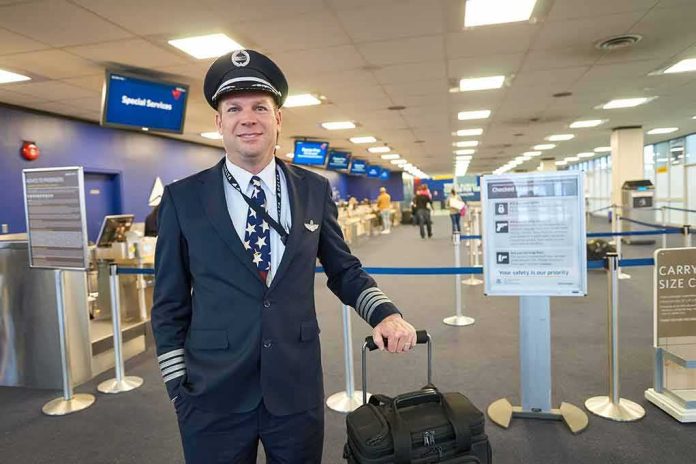
A Malaysia Airlines pilot was arrested in Jakarta after Indonesian authorities said they found more than 70,000 ecstasy pills in his luggage and later tied him to drug use while flying.
Quick Take
- Indonesian police said the pilot was detained after landing at Soekarno-Hatta International Airport in Jakarta.
- Customs officers said an X-ray scan led them to a suitcase with 14 packages of ecstasy pills and methamphetamine.
- Officials said urine tests were positive for methamphetamine, MDMA, and cocaine.
- Malaysia Airlines said it was reserving comment while cooperating with Indonesian authorities.
How the arrest unfolded
Indonesian authorities said the case began with baggage screening at the airport in Jakarta. Customs officers said they spotted a suspicious suitcase in an X-ray scan and then found 14 packages containing 70,114 ecstasy pills, along with methamphetamine, in the pilot’s luggage. Reporting also identified the suspect as a 39-year-old Malaysian pilot who had flown from Kuala Lumpur to Jakarta on a Malaysia Airlines flight.
Officials said the arrest came shortly after the flight landed, which turned a routine arrival into a major drug case. The scale of the seizure made the story spread fast, but the key claims still came from police and customs briefings rather than a full court record. That matters because the public learns first through the seizure figures and the arrest itself, while later steps decide what can be proven in court.
What Indonesian officials said
Indonesia’s National Police said the pilot tested positive for methamphetamine, MDMA, and cocaine after the arrest. Reuters-reported details echoed by other outlets said police also claimed he had been on duty while under the influence of narcotics. Those are serious allegations, but they remain official claims at this stage. The public record available now shows what investigators say they found, not a final judgment by a court.
Some reporting added that investigators believed the pilot was linked to a wider trafficking network and that he may have been promised payment for moving the drugs. That reporting also said officers were still trying to identify the network behind the alleged shipment. For readers, the larger issue is clear: airport drug cases can move from a suitcase seizure to a broader syndicate claim very quickly, before the evidence is fully tested.
Why the case drew wide attention
The case hit a nerve because it combined several flash points at once: an airline pilot, a major international airport, a large drug haul, and claims of drug use while working. Those facts give the story a broader meaning beyond one arrest. It feeds a familiar public anger on both the left and the right about weak borders, corrupt networks, and officials who seem to react only after a crisis is already in the open.
A Malaysian pilot has been arrested in Indonesia after authorities allegedly found more than 70,000 ecstasy pills and 4 grams of methamphetamine hidden in his luggage at Jakarta's Soekarno-Hatta International Airport.
The 39-year-old, identified only by the initials MSO, was… pic.twitter.com/PXWK0KchxT
— IGNITE (@Ignitestudi0) August 2, 2026
Malaysia Airlines said it was reserving comment and would cooperate with Indonesian authorities. That is the main response from the airline in the available reporting, and it leaves the case in the hands of Indonesian investigators. For now, the arrest stands as a high-profile example of how fast a local customs stop can become an international scandal, especially when the suspect works in the cockpit of a passenger airline.
Sources:
apnews.com, washingtonpost.com, youtube.com