
Two fully loaded Saudi oil tankers made U-turns in the Red Sea after Houthi warnings, showing how threats alone can stall global energy flows.
Story Highlights
- Two Saudi crude tankers reversed course after a Houthi blockade warning, marking the first concrete disruption.
- The declared blockade targets traffic near the Bab el-Mandeb Strait, a vital oil chokepoint.
- United States maritime guidance flags higher risk in the Red Sea and nearby waters for targeted vessels.
- Saudi export hubs have shown resilience this year, but workarounds have limits if the Red Sea tightens.
What Happened in the Red Sea on July 21
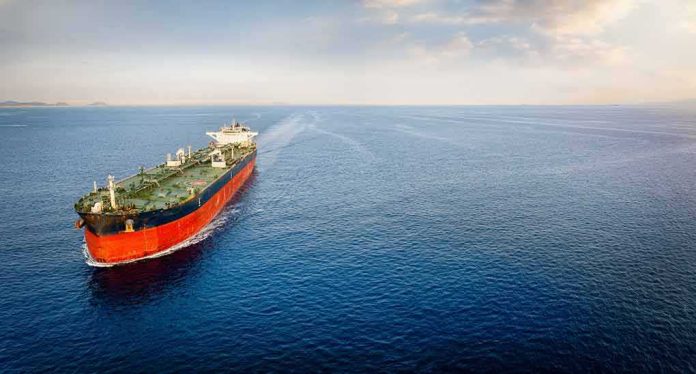
Reuters reported that two tankers carrying Saudi crude reversed course in the Red Sea after a warning from Yemen’s Iran-aligned Houthi group. The move followed the group’s declaration of a maritime blockade on Saudi Arabia, which sits on one side of the Bab el-Mandeb Strait. The tankers had loaded oil for Asia. Their quick U-turn showed that shipping firms are taking the threat seriously, even without shots fired. Oil prices rose on the news as traders watched for wider impacts.
The Houthi announcement framed the action as retaliation for Saudi measures against Yemen. Multiple outlets reported the warning as effective immediately and focused on the chokepoint risk. The Bab el-Mandeb is the narrow gate between the Red Sea and the Gulf of Aden. Ships fear drones, missiles, and fast boats, but they also fear insurance losses and crew risk. A single warning can change routing, raise costs, and slow deliveries. That is the power of threat at a chokepoint.
Why the Blockade Threat Matters for Energy and Trade
The Red Sea handles a big share of seaborne oil and goods. When carriers judge the risk as too high, they reroute around Africa. That adds time and cost that buyers and drivers feel later at the pump. The United States Department of Transportation’s maritime notice warns that ships with tracking on are at higher risk of targeting in the Red Sea, Bab el-Mandeb, Gulf of Aden, and nearby seas. Some crews may switch off tracking, which can hide risk but also clouds visibility for rescue if trouble starts.
Think of this as asymmetric pressure. A non-state group does not need a navy to force choices on global firms. A public threat, a few signals at sea, and insurers rethink coverage. That is what we saw in past Red Sea flare-ups. Studies and briefings since late 2023 have mapped this pattern of warnings and selective strikes that pushed many ship owners to divert or delay. Monday’s U-turns fit that playbook, and they may not be the last if fear stays high.
Saudi Resilience and Its Limits
Saudi Arabia has options, but none are perfect. Earlier this year, crude loadings at the Red Sea port of Yanbu kept moving even after a pipeline attack, showing that exports can continue under stress. Saudi Aramco can also tap spare capacity or overseas stocks to smooth bumps. These steps can ease shocks for a while. But a lasting squeeze at Bab el-Mandeb would still slow flows and raise costs because many routes need that strait to reach markets fast.
The big question is capacity versus chokepoint risk. Ports can run near maximum and still lose time and money if ships must loop around Africa. That route adds about two weeks to Asia. Even if Saudi ports push volume, buyers pay for fuel and time. Over weeks, that can lift prices and strain budgets for families and small firms. That is why two ships turning back matters. It hints at wider caution that can ripple into energy bills and goods prices far from the Red Sea.
Security Stakes for the United States and Allies
United States leaders face a hard choice set. Protect sea lanes, avoid a wider war, and keep oil moving at a fair price. United States maritime guidance already flags the area as high risk for targeted ships, which supports tighter escorts and better intel sharing. But escorts are costly and cannot be everywhere. Many Americans see a pattern where warnings keep coming, costs keep rising, and Washington debates more than it delivers. That feeds the view that elites protect systems, not citizens.
Two tankers loaded with Saudi oil turned around in the Red Sea today. The Xin Long Yang (2M bbl, China) and the Rodos (700k bbl, India) reversed for Suez after Yemen's Houthis warned all tankers against calling at Saudi ports. Track it on MarineRadar. pic.twitter.com/7DAlRcqj0D
— Marine Radar (@marineradar) July 21, 2026
Both left and right share a concern here. Families worry about higher gas and shipping costs. Veterans and taxpayers worry about another open-ended security mission. The tanker U-turns show how fast a distant warning can touch wallets at home. Clear goals, real-time transparency, and measurable results will matter now. Without that, the next threat at a chokepoint can again force private actors to make public policy by default, with citizens paying the price.
Sources:
youtube.com, en.wikipedia.org, english.aawsat.com, turkiyetoday.com, bloomberg.com