
Colombia’s leftist president refused to accept his ally’s election loss — and blamed Israel for rigging the vote.
Story Snapshot
- Colombian President Gustavo Petro rejected preliminary results showing his ally Iván Cepeda lost the 2026 presidential runoff to Trump-backed outsider Abelardo de la Espriella.
- Petro claimed election software was hacked and demanded a full forensic audit — but provided no evidence, and both Colombian electoral authorities and international observers rejected the allegation.
- Petro pointed blame at Israel, claiming foreign interference rigged the outcome in de la Espriella’s favor.
- International monitors from the European Union and the International Republican Institute found the election was run with transparency and found no sign of systemic fraud.
Petro Refuses to Accept His Ally’s Defeat
Colombia’s 2026 presidential runoff ended with Abelardo de la Espriella winning roughly 49.7% of the vote to Iván Cepeda’s 48.7%, with more than 99% of votes counted. That is a narrow margin, but a clear one. Cepeda refused to concede, saying the early count was “not yet official or binding.” President Gustavo Petro went further — publicly calling for a full recount and claiming the election software had been hacked to produce fraudulent results in de la Espriella’s favor.
Petro’s fraud claims rested on allegations of irregular internet protocol address changes in the voting system. He demanded a forensic audit and pointed to a reported discrepancy involving roughly 886,000 voter records. The problem: Petro offered no technical proof. PBS and the Associated Press reported that Petro cast doubt on the election’s legitimacy “without providing evidence.” Colombian election officials and the European Union observation mission both reviewed the claims and found no evidence of hacking or large-scale manipulation.
Blaming Israel With No Proof
Petro did not stop at accusing the software. He blamed Israel — specifically Prime Minister Benjamin Netanyahu — for interfering in the Colombian election to help de la Espriella win. The claim spread quickly online but was not backed by any disclosed evidence in the public record. It fits a familiar pattern: when radical left-wing leaders lose elections, they reach for conspiracy theories to explain the result rather than accept the voters’ verdict.
This kind of blame-shifting is not unique to Colombia. Across Latin America in recent years, losing candidates in Honduras, Bolivia, and Ecuador refused to accept results after close races. Research shows that when candidates dispute election outcomes, their supporters grow far less trusting of the entire electoral process — even when no fraud occurred. Petro’s accusations, unsupported as they are, risk doing lasting damage to Colombia’s democratic institutions.
International Monitors Said the Election Was Clean
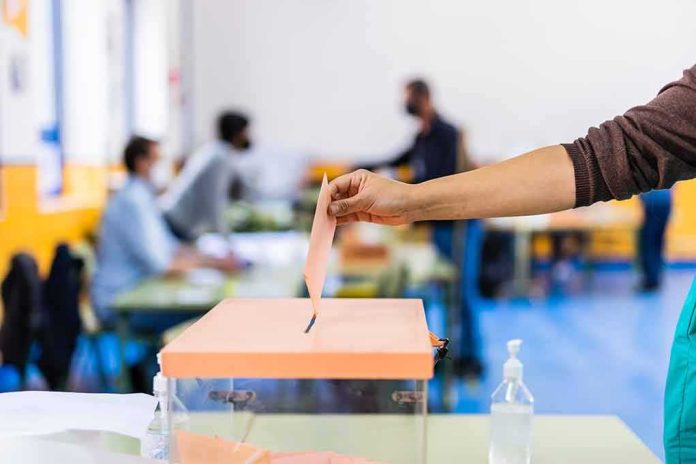
Multiple respected observer missions watched Colombia’s 2026 presidential election and reached the same conclusion. The International Republican Institute said electoral authorities ran the process with “professionalism, technical competence, and resilience” and found no systemic problems that could compromise vote integrity. The European Union observation mission said the results process had “strong transparency and traceability,” with tabulation conducted by judges and notaries in front of party representatives.
These are not rubber-stamp assessments. Observer missions flag real problems when they find them. The fact that two separate international bodies — one American-linked, one European — both cleared the election carries significant weight. De la Espriella, who ran as a political outsider with backing from President Trump’s orbit, won a legitimate race. Petro’s refusal to accept that outcome, and his decision to blame a foreign government without proof, says far more about his own political agenda than it does about Colombia’s election.
What This Means for Colombia and the Region
Petro is a self-described socialist who has clashed repeatedly with the United States during his presidency. His ally Cepeda represented a continuation of that left-wing governing approach. De la Espriella’s win signals that Colombian voters wanted a different direction — just as voters across Latin America have punished incumbents and leftist governments in recent election cycles. Petro’s response to that verdict is to cry fraud, point at Israel, and refuse to let the democratic process move forward cleanly.
For Americans watching from the outside, this situation is a reminder of what happens when radical leaders put ideology ahead of democratic norms. Petro’s baseless accusations undermine the very institutions that make peaceful transfers of power possible. Colombia’s voters spoke. International monitors confirmed the process was fair. The only thing standing in the way of a clean transition is a president who cannot accept that his side lost.
Sources:
[1] Web – Colombian President Refuses to Accept the Election Defeat of His …
[2] Web – 2026 Colombian presidential election – Wikipedia
[3] Web – Trump-backed political outsider wins Colombia election, initial … – …
[4] Web – Colombia: Presidential Elections 2026–2030 First Round Results
[5] Web – Latest results from Colombia’s presidential runoff election show
[6] Web – Colombians vote in a presidential runoff that pits an outsider against …
[7] Web – Poll Tracker: Colombia’s 2026 Presidential Election – AS/COA
[8] YouTube – LIVE: Polls Close in Colombia Presidential Runoff as Nation Awaits …
[9] Web – [PDF] PRELIMINARY STATEMENT – EEAS – European Union
[10] Web – 20 Members of Congress Release Joint Statement Affirming …
[11] X – Our international election observation mission to Colombia’s 2026 …
[12] Web – How Colombia can reduce security threats ahead of its presidential …
[13] Web – What Happens When You Clean Up an Election
[14] Web – [PDF] Colombia’s Presidential Elections – America First Policy …
[15] Web – IRI Preliminary Statement of Colombia’s 2026 Presidential Elections
[16] Web – I led my colleagues in opposing the shameless interference of …
[17] Web – IRI Pre-Election Assessment Mission to Colombia’s 2026 …
[18] Web – [PDF] Report – OAS.org
[19] Web – Elections and democracy in Latin America: emerging trends
[20] Web – Latin America 2025: protest voting amid fragmentation and …
[21] Web – Public Distrust in Disputed Elections: Evidence from Latin America
[22] Web – Latin America’s Anti-Incumbent Wave Will End in Tears
[23] Web – Public Distrust in Disputed Elections: Evidence from Latin America
[24] Web – Latin America & the Caribbean | IFES
[25] Web – Electoral Volatility and Party System Polarization in Latin America …
[26] Web – [PDF] Brand dilution and the Breakdown of Political Parties in latin …
[27] Web – [PDF] Political institutions, instability, and democratic performance …
[28] Web – [PDF] Boundary Disputes in Latin America – United States Institute of …