
The real story at Newark’s Delaney Hall is not just tear gas and riot lines, but a quiet war over who Americans believe about what happens behind locked federal doors.
Story Snapshot
- Advocates and detainees allege hunger strikes, spoiled food, and beatings inside Delaney Hall, while federal officials flatly deny abuse.[1][2]
- Outside, protests morphed into street battles, with mounted police, tear gas, and arrests of demonstrators—many from out of state.[1][3][6]
- New Jersey’s governor and members of Congress demanded access, were initially blocked, then claimed they saw unsanitary conditions once they got inside.[1][2]
- Curfews, “outside agitator” accusations, and dueling narratives turn this detention fight into a test of transparency, law enforcement, and common sense.[1][2][3][6]
A locked facility becomes a public battlefield
Newark’s Delaney Hall immigration detention center went from obscure bureaucratic waystation to national flashpoint in a matter of days, as hundreds of detainees, activists, federal agents, and New Jersey officials collided in a bitter dispute over what happens inside the compound.[1][2] Protesters claim detainees launched a hunger strike over rotten food and poor medical care, while the Department of Homeland Security insists conditions meet federal standards and denies any hunger strike exists.[1][2]
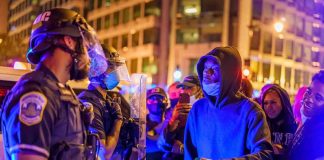
Street-level tension escalated fast. Demonstrators blockaded access roads and clashed repeatedly with federal immigration officers and state police, leading to at least six arrests for alleged assaults on law enforcement.[1][3] Video from multiple outlets shows officers deploying force to clear crowds, and local coverage documents protesters and media shoved to the ground during tumultuous scenes outside the gates.[1][3][4] The atmosphere shifted from protest to something much closer to a small urban riot.
Inside Delaney Hall, dueling narratives on conditions and abuse
Advocates and family members tell a grim story of life inside Delaney Hall. Organizers with groups such as Make the Road New Jersey say detainees report spoiled food, inadequate medical care, and “deplorable” conditions, and claim detainees resorted to a hunger strike to demand basic dignity.[1][2] Some immigrant-rights groups went further, accusing Immigration and Customs Enforcement officers of attacking hunger strikers with batons and tear gas, leaving unconscious detainees and “blood on surfaces.”[1]
Federal officials answer with a very different picture. A Department of Homeland Security statement describes detainees as receiving three meals a day, clean water, clothing, bedding, showers, and ready access to phones for lawyers and family.[1] The department says certified dietitians evaluate meals and that any use of force followed established policy, using the “minimum amount of force” to stop a physical altercation among detainees, with no serious injuries reported.[1] Officials also characterize many detainees as “the worst of the worst criminal illegal aliens,” emphasizing serious charges like murder and sexual assault.[1]
Politicians push the gate and raise the stakes
New Jersey Governor Mikie Sherrill and members of Congress attempted to conduct an oversight visit on Memorial Day, only to be initially denied entry by federal authorities.[1] That move inflamed suspicions that there was something federal officials did not want the public to see, especially among those already skeptical of private-prison contractors and immigration detention.[1][2] Lawmakers ultimately gained access and later alleged they found unsanitary living conditions, unhealthy food, and inadequate medical care, with one congressman saying, “This is not America.”[2]
The Department of Homeland Security rejected both the abuse allegations and the idea that its visitation decisions were political concessions. Officials insisted that family visitation had been paused only because “violent riots” made the area unsafe, and that normal visitation was resumed once security was stabilized, not because the governor demanded it.[2] That disagreement—were visits restored by pressure, or by policy—is not a small detail; it speaks to who is really in charge when federal and state power collide on immigration enforcement.
Outside agitators, local fears, and law-and-order politics
As clashes mounted, New Jersey officials and local media began noting that many of those arrested or most aggressive at the barricades were not from Newark or even New Jersey.[1][3] State police data cited on-air indicated that a majority of arrestees came from out of state, which reinforced the official narrative that “outside agitators” hijacked local concerns into a broader anti–Immigration and Customs Enforcement campaign.[3][4] From a law-and-order, conservative vantage point, that matters: communities have a right to peaceful protest, not imported chaos.
Mayor of Newark in northeastern US imposes curfew around an immigration detention facility at Delaney Hall after several days of protests and clashes between anti-ICE demonstrators and security forces pic.twitter.com/YVvF2BNmgq
— TRT World Now (@TRTWorldNow) May 31, 2026
Newark’s mayor imposed a curfew around Delaney Hall after several nights of what he called “intense clashes,” a step that underlines how far this moved from a routine demonstration.[6] The curfew, plus mounted police and crowd-control tactics, drew predictable criticism from the activist left, which framed it as an attempt to chill dissent and shield Immigration and Customs Enforcement from scrutiny.[4][6] Federal and state law enforcement, for their part, praised cooperation and portrayed their actions as necessary to protect officers, detainees, and the surrounding community.[1][6]
Why this detention fight matters far beyond Newark
Immigration detention has become a recurring theater for these same questions: What is really happening inside facilities the public cannot see, and who deserves the benefit of the doubt? Advocates almost always surface abuse and neglect allegations first; agencies and private operators almost always respond with categorical denials and carefully sanitized descriptions of conditions.[1][2] Delaney Hall follows that script, but adds a modern twist—viral video, national commentators, and street clashes that risk overshadowing the core question of detainee treatment.
A common-sense, conservative approach does not blindly accept either narrative. Law enforcement deserves strong support when facing coordinated efforts to breach secure facilities or endanger officers. At the same time, a government that can lock people up should tolerate robust oversight and independent inspection, especially when hunger strikes and serious abuse claims emerge.[1][2] Delaney Hall shows what happens when transparency lags, political theatrics surge, and a facility built for quiet custody becomes the loudest stage in New Jersey.
Sources:
[1] Web – Agitators outside the Delaney Hall detention facility in New Jersey …
[2] Web – Anti-ICE agitators clash with federal agents outside Newark …
[3] Web – Protesters shoved, pepper sprayed during clash with ICE …
[4] Web – 6 protesters arrested after clash with ICE officers outside …
[6] YouTube – ICE Protest Erupts in Newark | Activists Clash Outside …