

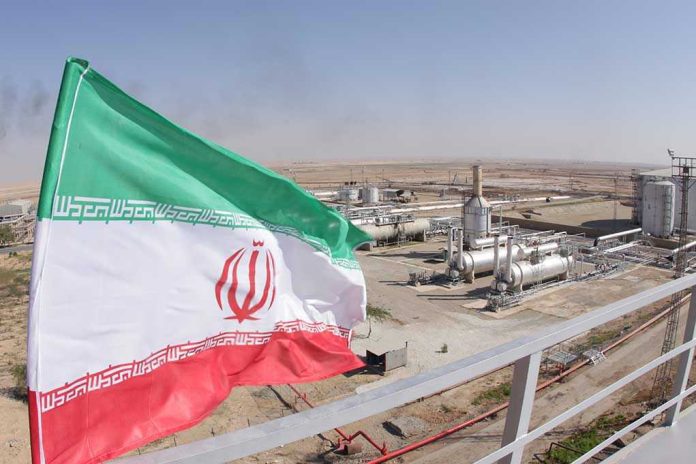
A fragile 60-day U.S.–Iran ceasefire framework could reopen the Strait of Hormuz and spark new nuclear talks—but conflicting messages and ongoing skirmishes threaten to unravel it fast.
Story Highlights
- U.S. officials say a preliminary text for a 60-day ceasefire extension and nuclear talks is close, with wording disputes remaining [3].
- The framework reportedly aims to reopen the Strait of Hormuz for commercial shipping, tying directly to energy security [5].
- Reports conflict on terms and legal status; no finalized public text exists, leaving room for confusion and misinterpretation [3].
- Fresh incidents and Iranian threats cast doubt on real-world compliance during negotiations [5].
Negotiators Edge Toward a 60-Day Extension With Nuclear Talks Attached
Senior U.S. voices describe a near-finished preliminary text that would extend the current ceasefire for 60 days and launch negotiations over Iran’s nuclear program, with disagreements narrowed to wording details [3]. A U.S. official also outlined that the framework links the pause to tangible de-escalation steps rather than an open-ended truce [5]. Supporters frame this as structured diplomacy designed to prevent an Iranian nuclear breakout while testing whether Tehran will accept verifiable limits consistent with U.S. red lines [3].
Reports indicate the proposal would reopen the Strait of Hormuz for commercial shipping, a move that directly affects fuel costs and global supply chains [5]. That maritime corridor carries a significant share of the world’s oil, and any reopening could ease pressure on energy markets important to American families and small businesses. However, competing accounts describe different security mechanisms for shipping, revealing contested details that underscore why a signed, public text remains essential to clarity [3].
Contradictory Signals and On-The-Ground Incidents Create Risk
U.S. and Iranian statements about recent strikes pull in opposite directions, with Washington describing actions as self-defense while Tehran casts them as ceasefire violations, a narrative split that undermines confidence in the framework’s durability [3]. Broadcast reporting says the ceasefire has already been tested by Iranian fire on U.S. drones and a fighter jet, followed by U.S. responses, highlighting how fast momentum can shift from diplomacy to confrontation while talks proceed [5]. This kinetic backdrop threatens public support and policy focus.
The absence of a publicly released memorandum or annexes fuels speculation around key terms, including security arrangements for the strait and the handling of enriched uranium stockpiles [3]. Without synchronized, verifiable language, both sides can sell different versions at home, eroding coherence. Conservative observers will recognize a familiar pattern: when international deals move ahead of transparent documentation, America risks mixed messages, weaker leverage, and room for adversaries to pocket concessions while delaying hard commitments.
Energy Security, Red Lines, and Verification Questions
American officials emphasize that any deal must ensure Iran never obtains a nuclear weapon, reflecting clear negotiating red lines [3]. The reported linkage between ceasefire extension, maritime reopening, and nuclear talks makes strategic sense only if verification is concrete and enforceable. Tehran’s insistence on tangible verification before implementation, as summarized in available reports, shows it seeks leverage-preserving steps rather than broad concession, which heightens the need for tough inspections and consequences for violations that protect U.S. interests [3].
🚨: US and Iran Reach Tentative Deal to Extend Ceasefire for 60 Days
US and Iranian negotiators have agreed on a framework to extend their fragile ceasefire by 60 days and begin talks on Iran’s nuclear programme, according to US sources.
The deal has not yet been approved by… https://t.co/XE3dzsOuK6
— The Cable® (@TheCableHaux) May 28, 2026
Because shipping through the Strait of Hormuz directly influences gasoline and diesel prices, Americans have a tangible stake in whether this framework holds and under what conditions [5]. If commercial flows normalize, families and truckers could see relief. If terms prove murky or unenforceable, markets may price in renewed risk, punishing consumers. A credible framework therefore must publish terms, timelines, and enforcement, align allied positions, and define automatic penalties for breaches—so adversaries cannot hide behind ambiguity while undermining regional stability [3].
Sources:
[3] YouTube – Iran war: Hegseth argues ceasefire pauses 60-day deadline
[5] Web – US, Iran close to agreeing a 60-day ceasefire extention