

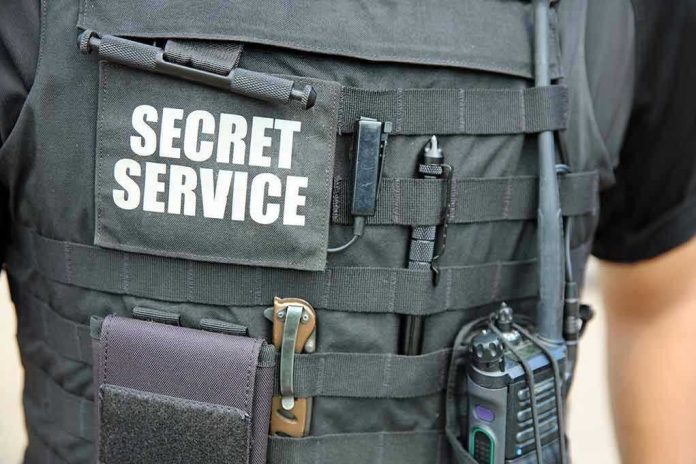
A single adult video can turn a national security badge into a blackmail liability overnight.
Story Snapshot
- One report alleges OnlyFans creator Brittney Jones posted explicit content involving a Secret Service agent.
- The agent remains unnamed, and no official statement or dated timeline appears in the available reporting.
- The bigger issue is not bedroom behavior but the leverage created when a protective-service professional becomes commercially identifiable.
- With only one outlet advancing the claim so far, the story sits in a “watch for confirmation” zone rather than a settled fact pattern.
When a Secret Service Agent Becomes Content, the Risk Isn’t Gossip—It’s Leverage
The developing claim centers on Brittney Jones, an adult content creator, posting graphic videos on OnlyFans that allegedly feature sex acts with a U.S. Secret Service agent. The reporting frames her as living a “double life,” but the more consequential double life belongs to the agent: sworn protector by day, monetized participant by night. That mix matters because the Secret Service works in a world where trust, discretion, and vulnerability management are the job.
"Lives a Double Life" – Sex Content Creator Posted Graphic Videos of Sex Acts with Secret Service Agent on OnlyFans… Developing | The Gateway Pundit | by Cristina Laila https://t.co/GJFuScopU1
— Gayle (@MesaWall) April 19, 2026
The available public details stop where most readers would want them to start. No clear dates, no identification of the agent, no cited agency response, and no corroborating reports appear in the provided research. That lack of specificity matters for two reasons: it limits what anyone can responsibly conclude, and it reveals how fast a modern scandal can metastasize even before facts mature. A blurry claim can still create crystal-clear reputational damage.
The OnlyFans Problem Is Not Morality Policing; It’s Operational Exposure
Adults can make adult choices, and common sense conservatives usually resist turning government into a hall monitor for private life. The Secret Service, however, doesn’t get treated like a normal workplace because it isn’t one. Agents protect presidents, candidates, and visiting foreign leaders. Their personal conduct intersects with national interests when it creates kompromat—material that can be exploited. A commercially distributed explicit video, if authentic, doesn’t merely embarrass; it can be weaponized.
Operational exposure comes in layers. First, identification risk: a face, tattoo, voice, or even a room layout can be enough for online crowds to dox someone. Second, coercion risk: if a third party can threaten to publicize or expand distribution, they can seek money, favors, or access. Third, credibility risk: protective work runs on tight teamwork and judgment under stress; anything that signals compromised discretion can erode internal confidence and public trust.
Why “Developing” Stories Demand Discipline From Readers and Institutions
One-source stories tempt people into instant verdicts, but adult-content allegations demand extra caution. The internet routinely misidentifies people, recycles old content, and splices narratives for clicks. The report provided offers a headline-grabbing claim without the scaffolding that lets the public evaluate it: chain of custody for the videos, verification steps, or comment from the alleged participants. Responsible readers should separate “possible” from “proven” until independent confirmation arrives.
Institutions also need discipline. If the allegation is credible, leadership typically faces two competing duties: act fast to protect the mission and act fairly to protect due process. The best practice in sensitive roles is an internal review that preserves evidence, assesses security exposure, and temporarily limits assignments that carry heightened access. That approach avoids a political witch hunt while still treating the mission like the fragile asset it is.
The Culture Clash Behind the Scandal: Monetized Intimacy Meets Public Service
OnlyFans and similar platforms turned intimacy into a subscription economy, and that economy erases old boundaries. A “private moment” can become a product; a product can become permanent; permanent can become searchable. Government service, especially in security, still relies on the older assumption that agents can keep their personal lives from becoming public vulnerabilities. Those two realities collide hard, and the collision doesn’t care who people vote for or what their personal views are.
The conservative lens here is straightforward: government exists to provide core functions like public safety and national security, and employees in those roles must not create unnecessary risk. That principle doesn’t require shaming consensual behavior. It requires acknowledging that discretion is part of the job description when the job places you near the nation’s most protected people. Personal freedom and professional duty can coexist—until someone sells the duty’s vulnerability for content.
What to Watch Next: Confirmation, Accountability, and Policy Reality
The next facts that matter are simple: Did the videos exist as described, did they actually involve a Secret Service agent, and did the agency become aware and respond? Absent those answers, the public sits with an allegation and a lot of projection. If confirmation arrives, then accountability becomes the real test: not performative outrage, but measured consequences tied to risk, rules, and integrity. If confirmation doesn’t arrive, the lesson becomes media hygiene.
The story’s hook is sex, but the enduring takeaway is security: modern life creates more ways to compromise people than ever before, and protective agencies can’t pretend those pressures stop at the office door. If you want one practical standard that fits both common sense and conservative values, it’s this: high-trust public roles demand high-discipline private choices, not because pleasure is a sin, but because leverage is a threat.