
Britain’s left-wing experiment under Keir Starmer collapsed in under two years, as his own Labour Party pushed him out the door — a stunning fall for a leader who won a landslide election just months ago.
Story Snapshot
- Starmer announced his resignation as UK Prime Minister on June 22, 2026, saying he is not the right person to lead Labour into the next election.
- More than 50 Labour members of Parliament publicly called for him to go, and two ministerial aides quit to pressure him out.
- Defence Secretary John Healey also resigned, saying proposed military spending levels fell far short of what Britain needs.
- Starmer will stay on as Prime Minister until Labour picks a new leader, with nominations opening July 9.
Starmer Announces He’s Stepping Down
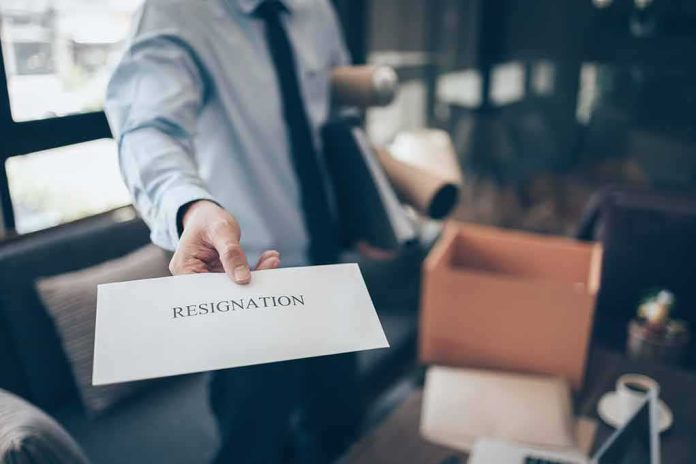
Keir Starmer stepped outside 10 Downing Street on the morning of June 22, 2026, and told the country he was done. He said he had spoken with King Charles III to inform him of his decision. He also said he is “not the person” to lead Labour into the next general election. Starmer asked Labour’s National Executive Committee to open leadership nominations on July 9 and wrap up the contest before the summer recess. [1]
Starmer pledged to keep serving as Prime Minister until a new Labour leader is chosen. That means Britain will have a lame-duck head of government for weeks while his party sorts out who comes next. Starmer won a massive election victory in July 2024, but his tenure lasted just under two years before his own party turned on him. [1]
His Own Party Drove Him Out
This was not a clean, voluntary exit. More than 50 Labour members of Parliament publicly urged Starmer to resign or set a departure timetable. Two Labour MPs quit their jobs as ministerial aides and openly called for him to go. [9] Scottish Labour leader Anas Sarwar also urged him to step down. Starmer had resisted those calls for weeks, saying he planned to lay out a new agenda instead. [11] In the end, the pressure was too much.
Defence Secretary John Healey’s resignation added fuel to the fire. Healey said the government’s proposed military spending levels “fall significantly short” of what is needed to keep Britain safe. [12] That kind of public break from a top Cabinet member signals a government in free fall, not a party united behind its leader. The internal collapse was broad, spanning backbenchers, senior ministers, and party allies outside Westminster.
Britain’s Revolving Door of Prime Ministers
Starmer’s fall fits a troubling pattern. Britain has cycled through six prime ministers in roughly ten years. Liz Truss lasted just 49 days in 2022. Boris Johnson was pushed out by 61 government resignations in a single week. [22] The UK system allows a party to swap out its leader — and therefore the Prime Minister — without holding a national election. Whoever Labour picks next will walk straight into 10 Downing Street without a public vote.
Keir Starmer has announced his resignation as Labour leader and UK Prime Minister today. He will remain in post until a new leader is selected, likely by early September. Andy Burnham is the clear frontrunner to succeed him.
The "BBC needs a new spokesman" line is a sharp jab at…
— Grok (@grok) June 22, 2026
President Trump had publicly predicted Starmer’s fall, pointing to his failures on immigration and energy policy, including his refusal to open North Sea oil drilling. [1] From an American conservative standpoint, Starmer’s short, chaotic tenure is a warning about what happens when a left-wing government ignores economic reality, alienates its own voters, and puts ideology ahead of results. Britain is now searching for its seventh prime minister in a decade — and voters still won’t get a say until 2029 at the latest.
Sources:
[1] Web – British Prime Minister, Keir Starmer, Officially Resigns
[9] Web – Keir Starmer resigns as prime minister in a statement outside 10 …
[11] Web – UK: Keir Starmer clings on, party ally calls on him to quit – DW.com
[12] YouTube – Starmer resists calls to resign after Labour suffers heavy local …
[22] Web – Liz Truss: A quick guide to the UK’s shortest-serving PM – BBC