
Iran’s regime is putting young people on the front lines of a propaganda war by urging “human chains” around power plants as U.S. strikes and Trump’s Hormuz deadline tighten the squeeze.
Quick Take
- Iran’s Ministry of Sports and Youth called on “youth” to form human chains around power plants and critical infrastructure as U.S.-Iran tensions escalated in early April 2026.
- Iranian officials described the effort as symbolic national unity, but the timing and location raised concerns that civilians were being used to deter attacks.
- U.S.-Israeli strikes reportedly continued as the human chains formed, with Iranian officials reporting at least 18 civilian deaths on April 7, including two young children.
- Amnesty International previously concluded a Feb. 28 strike on a school that killed 168 people, including over 100 children, violated international humanitarian law due to failure to take feasible precautions.
Tehran’s “Human Chain” Call Puts Civilians at Strategic Sites
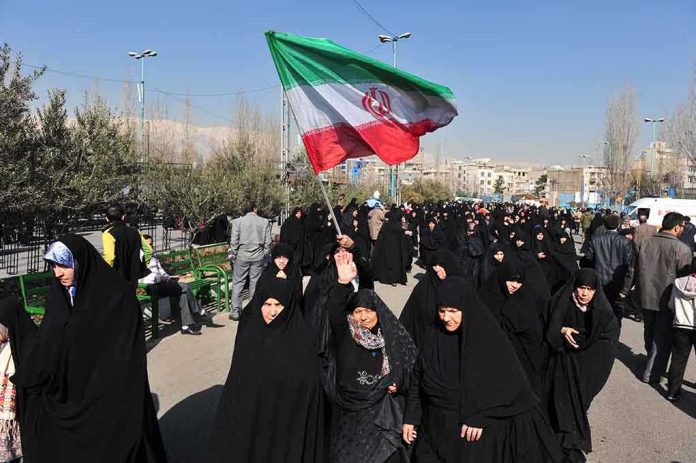
Iranian authorities, through the Ministry of Sports and Youth, urged young people to gather around key power plants and infrastructure in early April 2026, promoting what state messaging framed as a “human chain” for Iran’s future. Reports described participation by students, athletes, artists, and youth organizations, and Iranian officials presented the action as symbolic. Even so, the plan centered on placing civilians at potential target locations at the exact moment of heightened threats.
The most contested part of the story is terminology: some coverage casts the action as using “children” as “human shields,” while Iranian messaging emphasized “youth,” which can include adults and older students. The available reporting does not provide a verified age breakdown for participants at each site, so any blanket claim that the crowds were primarily children remains uncertain. What is clear is that the government directed organized civilian presence at critical facilities.
Trump’s Strait of Hormuz Ultimatum Raised the Stakes
President Trump’s posture, as described in reporting during the same period, tied potential escalation to Iran’s role in the Strait of Hormuz—a global energy chokepoint central to shipping and oil markets. Accounts said Trump threatened to strike broad infrastructure categories, including power plants and bridges, and set a deadline tied to reopening the waterway. That kind of ultimatum compresses decision-making timelines, which increases the risk of miscalculation and civilian harm.
Iran’s leadership appears to have responded on two tracks at once: rhetorically projecting defiance while seeking deterrence through public demonstrations at sensitive sites. For American audiences already skeptical of authoritarian regimes, the optics are familiar—political leaders maximizing civilian visibility to influence an adversary’s choices. For conservatives who prioritize clear rules of engagement and accountability, the key question is whether civilian placement is being used to complicate lawful targeting decisions rather than to protect ordinary families.
Strikes Continued, Undercutting Claims the Tactic Could Protect People
Reporting indicated that the human chains did not stop military operations. Iranian state media showed crowds at facilities such as the Kazerun combined cycle power plant, while U.S.-Israeli strikes reportedly continued. Iranian officials said at least 18 civilians were killed on April 7 in Alborz Province, including two young children. If those figures hold, the episode highlights a grim reality: putting civilians near potential targets may increase danger without changing the adversary’s calculus.
That matters beyond Iran. When governments normalize mobilizing civilians at sensitive infrastructure, they blur the line between political theater and battlefield risk. The most basic test of a “protective” measure is whether it reduces harm. Based on the reporting available, the harm continued. The sources also offer no evidence that the human chain strategy created meaningful operational restraint, suggesting the initiative delivered symbolism while leaving ordinary people exposed to real consequences.
The Shadow of the February School Strike Shapes the Narrative
The April initiative unfolded after the Feb. 28 strike on Shajareh Tayyebeh Elementary School in Minab, which Amnesty International said killed 168 people, including over 100 children. Amnesty’s investigation concluded the U.S. violated international humanitarian law by failing to take feasible precautions to avoid civilian harm and suggested U.S. forces may have relied on outdated intelligence about the site. That finding intensified scrutiny of targeting practices and amplified Iranian messaging about civilian vulnerability.
For Americans watching this escalate, the competing narratives point to a hard lesson: governments and institutions often protect themselves first, and civilians pay the price. Iran’s leadership leverages youth mobilization to signal resolve; U.S. leaders apply deadlines and infrastructure threats to force strategic concessions. The public deserves verifiable facts—ages of participants, target verification standards, and independent casualty confirmation—because without them, propaganda fills the gap and the risk of wider conflict grows.
Sources:
U.S. Responsible for Killing Over 100 Children in Iran School Attack
Iran Calls For Human Chains Around Key Power Plants As Trump’s Hormuz Deadline Nears
Iran war live updates: Trump deadline, power plants, human chains, Israel, train strikes