

Whether an ad “sexualizes women in sports” is not a metaphysical question; it’s an interpretive one grounded in visual grammar, audience history, and who gets to define what sport looks like. In the Sydney Sweeney–Novig campaign, the decisive factor isn’t stated intent but how the imagery functions within a century-old pattern that has repeatedly displaced women’s athletic identity with their bodies — and why so many working athletes recognized that pattern instantly.
The Short Version
- The backlash was led by named, elite female athletes who argued the ad objectifies women and sidelines athletic achievement.
- The ad’s composition — near nudity strategically covered by sports gear — matches a well-documented visual trope of sexualized sports marketing.
- Sweeney and Novig framed the concept as playful, sports-first, and aimed at adult bettors, denying any intent to comment on women’s sport.
- In debates like this, impact beats intent: when imagery mirrors a harmful representational pattern, athletes’ objections carry evidentiary weight.
What the ad shows — and why athletes called it sexualization
Advertising communicates as much through mise-en-scène as through copy. The Novig spots feature Sydney Sweeney largely nude, using footballs, tennis rackets, and hockey pads as strategic cover while proclaiming the platform’s fixation on “just sports.” That is not incidental styling; it is the concept. In press coverage and broadcast segments, athletes and outlets consistently described the campaign as “hypersexualized,” “nearly nude,” or reliant on sport equipment as modesty props — the very cues critics identify as objectification in a sports context. Australian Olympian Tilly Kearns argued the frame asks viewers to appraise desirability rather than competence, calling it “a step backwards” for women striving to be seen for skill, not body display. Olympians and world champions echoed the critique across countries and codes, forming a coherent claim: the ad uses the iconography of sport to sell a betting brand with a sexualized female body, not athletic performance.
That interpretation is not free-floating outrage; it sits on a long record. Studies and commentary across decades have shown that coverage of women’s sport has disproportionately emphasized appearance and “femininity” over athleticism, with sexualized imagery a recurring device for attention capture. In that lineage, swapping a uniformed competitor for a nude celebrity draped in gear is not a neutral substitution; it recycles the same representational move, now in service of a gambling platform rather than a magazine spread.
“We didn’t mean women’s sports” is not a rebuttal to what audiences see
Novig’s CEO, Jacob Fortinsky, and Sweeney herself offered a straightforward defense: the idea was playful, sports-focused, and built to cut through noise; it wasn’t “portraying female sports,” and the platform is for adults 21 and over. As a matter of brand strategy, that clarification is plausible — betting brands do optimize for attention and male-majority audiences. But advertising is judged by its semiotics, not its internal memos. You don’t have to claim to be speaking about women’s sports to participate in the visual economy that shapes how women in sport are perceived. When your sports-adjacent concept is a sexualized female body strategically masked by equipment, you’re operating in a representational system that female athletes know intimately because it affects their status, sponsorship, and credibility. Intent explains; it does not absolve.
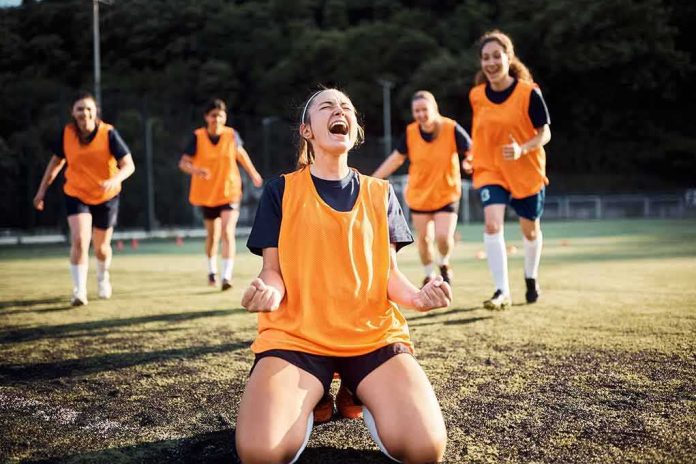
Fortinsky also stressed that Sweeney “drove” many visuals and that the aim was national awareness. Even if accurate, that simply allocates creative authorship; it does not alter the effect athletes object to. The central question remains: what meaning does the composition invite in a culture where women athletes fight to be taken seriously as competitors? On that question, the athletes’ lived expertise is probative. They are the ones constantly navigating sponsors’ requests for glam over grit, the ones fielding coverage that reduces them to bodies rather than game craft. Their swift, public rejection — including contrast videos captioned “this is what a woman in sports looks like” — is evidence about impact, not just opinion.
Nudity in sports media: when form and frame diverge
Sweeney’s response invoked nude or semi-nude portraits of athletes — Serena Williams, Sue Bird, Rob Gronkowski — to argue that bareness can celebrate strength rather than objectify. That is true in principle; context and authorship matter. Athlete-led body projects typically foreground musculature, training scars, and discipline, often pairing imagery with career narratives. The Novig spot does something else: it uses the props of multiple sports as coy cover while selling a gambling app through a celebrity unconnected to competitive sport. The frame is transactional attention capture, not a documentary of athletic embodiment. The same surface element (nudity) plays differently when the subject is the athlete’s performance versus the audience’s desire.
This distinction also helps explain why the critique was so broad. Female athletes were not condemning sexuality; they were rejecting an old shortcut — sex as the entry ticket to sports relevance — resurfacing precisely as women’s competitions are winning audiences on merit. In that environment, a campaign that leans on the oldest trick in the book feels, as swimmer Ariarne Titmus put it, like a kick in the face to the work of reframing women’s sport around achievement.
Mechanisms that make “sex sells” misfire in today’s sports economy
Why does this matter beyond one brand cycle? Because representational patterns shape markets. Sponsors and broadcasters take cues from what “works,” and sexualized creative, while reliably attention-grabbing, tends to center the viewer’s gaze on the model rather than the sport. That has downstream effects: it blurs the boundary between athlete and accessory; it invites copycat pitches that ask women competitors to play into the same trope; and it trains audiences to process women’s sport through desirability, not difficulty. No single ad can be shown to depress participation or ratings, and skeptics are right to demand rigor before claiming measurable harm; but pattern effects do not require a smoking gun to be professionally relevant. In the absence of clear, contrary data, the testimony of those operating inside the system — the athletes — is a rational guide to risk.
How to read this controversy without performative outrage
Three practical lenses help. First, separate autonomy from effect. Sweeney is entitled to creative choices; athletes are entitled to say those choices land on them. Both can be true. Second, weigh intent against legibility. A brand can insist its idea is “just sports,” but if the visual grammar says “sex with sports props,” the audience will read it that way — especially an audience trained by decades of similar imagery. Third, ask whether the same objective could be met with creative that honors athletic identity. Gambling brands and broadcasters have produced high-impact campaigns centered on craft, stakes, and community without defaulting to objectification; it’s not an artistic dead end to skip the coy towel.
Bottom line
The evidence in this case is asymmetrical. On one side, a named, multi-sport cohort of women athletes described with specificity how the Novig ad replicates a representational problem they confront every season. On the other, Sweeney and Novig offered a generic defense of fun intent, adult targeting, and attention economics. In advertising, the image is the argument. Here, the image trades on sexualized sports-adjacent cues that women in sport have spent years trying to retire. You don’t need a leaked brief to see why they pushed back — or to conclude that, in 2026 and beyond, “just sports” is better served by showing the sport.
Sources:
theguardian.com, nytimes.com, nine.com.au, nypost.com