
When an entire nation runs out of fuel and the lights go dark, it exposes not just Cuba’s broken system but also how great powers quietly squeeze ordinary people far from Washington and Havana.
Story Snapshot
- Cuba’s government says it has “absolutely none” of its main fuels left, triggering rolling blackouts and protests across the island.
- Cuban leaders blame a United States “fuel blockade,” while their own officials also admit to crumbling infrastructure and poor maintenance.
- The United Nations is warning of a deepening humanitarian emergency as hospitals, surgeries, water systems, and flights are disrupted.
- The crisis highlights how ordinary citizens are caught between an authoritarian state and a distant sanctions regime run by unaccountable elites.
Cuba’s Fuel Collapse and the Human Cost
Cuban officials publicly acknowledged this spring that the country had effectively run out of diesel and fuel oil, with the energy minister reportedly saying Cuba had “absolutely none” of those fuels left, and that the country had “run out of diesel and fuel oil.” These admissions came as Havana and other cities faced their worst rolling blackouts in decades and protests began spreading in the streets, fueled by anger over endless outages and shortages of basic goods.[1]
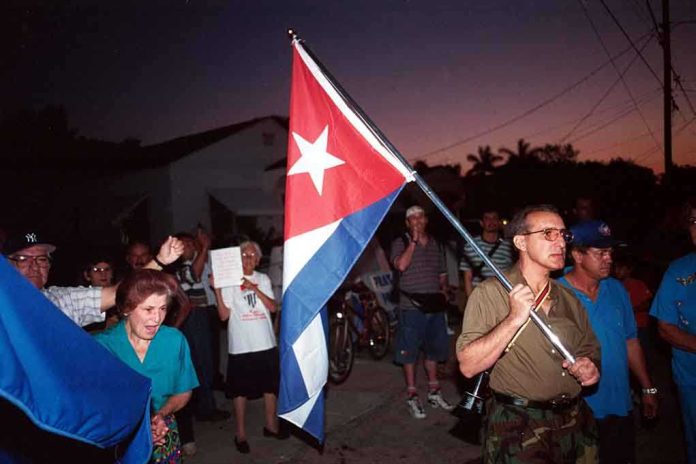
News reports describe parts of Havana without power for more than twenty hours a day and some residents going over forty hours without electricity as the grid repeatedly failed.[2][3] Video footage from international outlets shows darkened neighborhoods, food spoiling, and families trying to sleep outside to escape stifling heat without fans or air conditioning. Protesters have gathered in several locations, chanting for power and food rather than political slogans, underscoring how basic survival concerns are driving unrest.[1][2]
Blockade, Mismanagement, or Both?
Cuban leaders have repeatedly framed the crisis as the result of a United States “fuel blockade” layered on top of the decades-old embargo, arguing that Washington’s pressure has cut off vital oil shipments from partners like Venezuela and Mexico.[1][3] Several reports say fuel deliveries from those countries fell sharply after the Trump administration threatened tariffs on nations supplying oil to Cuba, with at least one segment describing Venezuela and Mexico reducing shipments under that pressure.[1][2]
At the same time, Cuban officials themselves have acknowledged that internal failures are a major part of the story. The country’s prime minister and local authorities have cited deteriorating infrastructure, poor maintenance at power plants, a lack of spare parts, and rising demand as key drivers of the blackouts, alongside fuel shortages. The largest thermoelectric plant, Antonio Guiteras, has suffered repeated breakdowns since 2024, causing nationwide outages when it fails and revealing how fragile the grid had become even before the current fuel exhaustion.
From Blackouts to Humanitarian Emergency
The humanitarian fallout is growing rapidly. The United Nations says three months of inadequate fuel have pushed Cuba to a “critical tipping point,” with severe impacts on health care, water, and food systems.[1] Hospitals are facing a backlog of more than ninety‑six thousand pending surgeries, including eleven thousand for children, as operating rooms and equipment cannot run consistently without reliable power. National vaccination campaigns have been delayed for thousands of infants, increasing long‑term health risks.[1]
Water access has also been badly hit. Roughly one million people are now dependent on water delivered by truck, but that service is constrained by the scarcity of diesel to run vehicles and pumps.[1] Earlier electrical failures saw the national grid disconnect several times, plunging large parts of the country into darkness for days at a time and disrupting refrigeration, communication, and transportation. Airlines have been warned that jet fuel is not available locally, leading some carriers to suspend flights and stranding travelers as shortages ripple through the economy.[2][3]
Global Power Games and Ordinary People
The United Nations has launched an updated action plan to support about two million people across eight Cuban provinces, including installing solar power for irrigation systems, hospitals, and schools and reinforcing water‑pumping infrastructure to reduce dependence on the unstable grid.[1] The organization has mobilized $26.2 million so far but reports a remaining funding gap of about $68 million, and says it is working with Cuban authorities and the private sector to keep aid operations viable despite fuel and logistics constraints.[1]
🇨🇺 Cuba receives new humanitarian aid shipments as the country faces worsening blackouts, fuel shortages, and food insecurity amid a deepening economic crisis.
🔗 https://t.co/bqHY2EeBRj#Cuba #HumanitarianAid #LatinAmerica #WorldNews #BreakingNews pic.twitter.com/xfW9QmLyhl
— Latam Chronicle (@LatamChronicle) May 19, 2026
For Americans watching from both the right and the left, the crisis exposes a familiar pattern: an authoritarian government that mismanages a critical system, and a United States foreign‑policy machine that applies pressure from afar while everyday people pay the price. Cuba’s rulers point to Washington to deflect blame; Washington leans on sanctions that rarely touch the elites in Havana. In between are millions of citizens sitting in the dark, a reminder of what happens when unaccountable power and failing governance collide.[1][3]
Sources:
[1] YouTube – CIA Chief in Havana As Energy Crisis Triggers Blackouts & Protests
[2] YouTube – Cuba says it has run out of oil as blackouts, protests spread across …
[3] Web – Cuba TURNS DARK After Trump BLOCKADE? Fuel Crisis Sparks …